





Building a pool in Bradford West Gwillimbury
Bradford West Gwillimbury sits on the flat plain around the Holland Marsh, between Newmarket and Barrie. New subdivisions have brought a wave of pool-sized backyards to town, but the ground here is the story: flat, wet land where the Town is strict about drainage, grading and what happens to storm water when a big hole goes in your yard.
Permits and bylaw rules
The Town's [pool enclosure permit package](https://media-003-ca.cdn.govstack.com/townofbwg-ca/media/gciiymh5/pool-enclosure-permit-package.pdf) governs every pool under the Swimming Pool Fence By-law 2016-65 and Zoning By-law 2010-050. The headline rules:
- Every pool needs an enclosure permit, and final grading or lot certification must be approved by the Town's Engineering department before you can even apply for it.
- No pool in a front yard; pools must keep at least 1.2 m to rear and interior side lot lines (the Town's package also cites a 3.5 m rear-yard figure for pools under section 4.34 — confirm your lot's setback with the Building Division before finalizing a layout).
- The fence must stand at least 1.2 m from the water's edge, with self-closing, lockable gates; chain-link mesh is capped at 38 mm.
- Above-ground pools cannot project more than 1.8 m above grade.
- Pools must stay 5 m from a septic tank and its distribution piping, and out of any easement.
- Temporary fencing is required during construction, and positive drainage and existing swales must be preserved.
- Fees run $139.55 for above-ground pools and hot tubs, $162.15 for in-ground — plus a $2,000 security deposit held against damage to Town property such as curbs and sidewalks, released when the job is made good.
- Conservation approval applies where the Lake Simcoe Region Conservation Authority regulates the lot.
Lots, soil and ground conditions
The Town's own insistence on grading plans, preserved swales and an engineering sign-off tells you what matters here: BWG is flat, low-lying and much of it drains slowly. Soils range from the organic muck of the Marsh's edge to heavy clay, and the water table sits high in many neighbourhoods. For an in-ground pool that usually means some dewatering, careful backfill and a grading plan that keeps rain water moving the way the subdivision designed it. None of this stops a pool — but a builder who shrugs at the grading question has not built here before.
The season
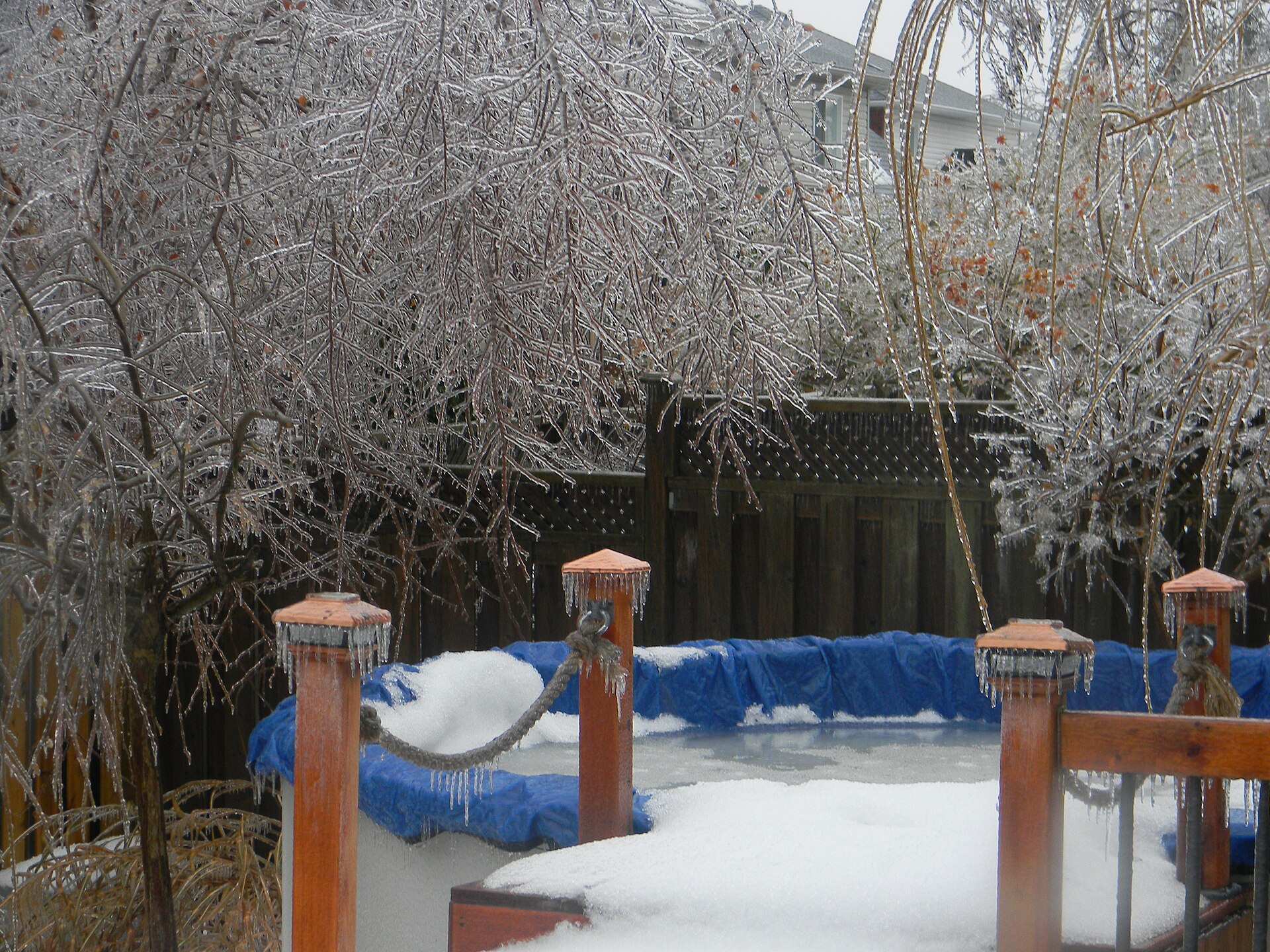
Digging starts after spring thaw, with most builds completed June through September. The swim season runs roughly late June to Labour Day, and every pool needs closing before freeze-up — lines blown out, pump and heater winterized, cover secured against snow load.
What drives the price and what to ask
Quotes in Bradford West Gwillimbury swing on dewatering and soil disposal, grading and restoration the Town requires, crane or excavator access into the backyard, electrical and gas runs, and the mandated fence, gates and temporary fencing. The $2,000 Town deposit and curb-damage undertaking are real money questions too: ask who fronts it and who repairs the boulevard.
Ask each pool builder:
- Who confirms my grading certificate with BWG Engineering before we apply?
- What is your dewatering plan, and how is it charged if the hole keeps filling?
- Who pays the permit fees and the $2,000 deposit, and who fixes any damage to curbs or sidewalks?
- How far does the pool need to sit from my lot lines and septic, and does my preferred shape still fit?
- What does the written warranty cover — shell, plumbing, liner, workmanship — and for how long?
- Are opening and closing included in the first year, and what do they cost after that?