Building a pool in North Bay
North Bay bridges the waters of Lake Nipissing and Trout Lake across the rugged bedrock of the Canadian Shield. The city's geography shapes every aspect of an inground pool installation: older neighbourhoods on the flats near Lake Nipissing sit on sandy glacial till and silt, while properties on Airport Hill, along the Laurentian Escarpment, and across newer residential ridges often sit directly on hard Precambrian granite and gneiss. Building an inground pool here demands specialized knowledge of northern frost lines, potential rock excavation, and municipal fence regulations administered by the City of North Bay.
Permits and bylaw rules
Pool enclosures and safety fencing are regulated under the City's [Building Permits department](https://northbay.ca/services-payments/building-development/building-permits) through [Fence By-law No. 2002-105](https://northbay.ca/by-laws/2002-105/):
- A permit is required for all pool enclosures: No person may construct, alter, or maintain a fence or pool enclosure without first obtaining a permit from the Chief Building Official.
- Exclusions: The [fence by-law](https://northbay.ca/by-laws/2002-105/) excludes wading or reflecting pools no deeper than 18 inches (0.45 m) and above-ground hot tubs with a lockable cover.
- Permit application and fees: The property owner or contractor must submit a completed Fence Permit Application, property survey or site plan, and owner's consent form to the Building Department. The City's [application fee schedule](https://northbay.ca/services-payments/building-development/building-permits/application-fees/) lists $109 each for a fence permit and a blasting permit. If rock conditions require controlled blasting during excavation, a separate municipal blasting permit is also required.
- Enclosure height must be at least four (4) feet (1.2 metres): Every fence enclosing a private swimming pool, including all access gates, must measure at least 1.2 metres from finished grade to the top of the fence. In residential zones, side and rear property boundary fences used as pool enclosures can extend up to 6 feet (1.8 metres) in height.
- Non-climbable construction: Enclosure fences constructed of wood, chain link, metal, or masonry must not feature exterior rails, bracing, or attachments that facilitate climbing. The [fence by-law](https://northbay.ca/by-laws/2002-105/) allows horizontal bracing rails spaced at least 32 inches (0.8 metres) on center. Any vertical or horizontal openings must not exceed 3 inches (75 mm) in horizontal dimension. Barbed wire and electrified fences are strictly forbidden on residential pool enclosures.
- Gate hardware requirements: All gates forming part of a pool enclosure must match the height and structural durability of the fence, swing outwards away from the pool, hang on substantial hinges, and be equipped with a reliable self-closing and self-latching device positioned at the top on the pool side of the gate.
If your property is situated on or near the shorelines of Lake Nipissing, Trout Lake, Chippewa Creek, or adjoining ravine slopes and wetlands, your site plan will require review and approval from the [North Bay-Mattawa Conservation Authority](https://www.nbmca.ca/planning-permits/) before municipal approvals can be finalized. All electrical work for pumps, heaters, and underwater lighting requires a separate Electrical Safety Authority (ESA) notification and inspection.
Lots, soil and the season
Geology dominates the excavation phase in North Bay. In hillside neighbourhoods and rocky ridges, bedrock is frequently encountered within a few feet of the surface. Digging into solid granite requires specialized heavy equipment, including excavator-mounted hydraulic rock breakers (hoe-ramming) or controlled micro-blasting, both of which add equipment hours and hauling expenses. Conversely, flatter lots near Lake Nipissing feature sandy and silty ground with a high water table that requires proactive trench shoring and dewatering pumps during excavation.
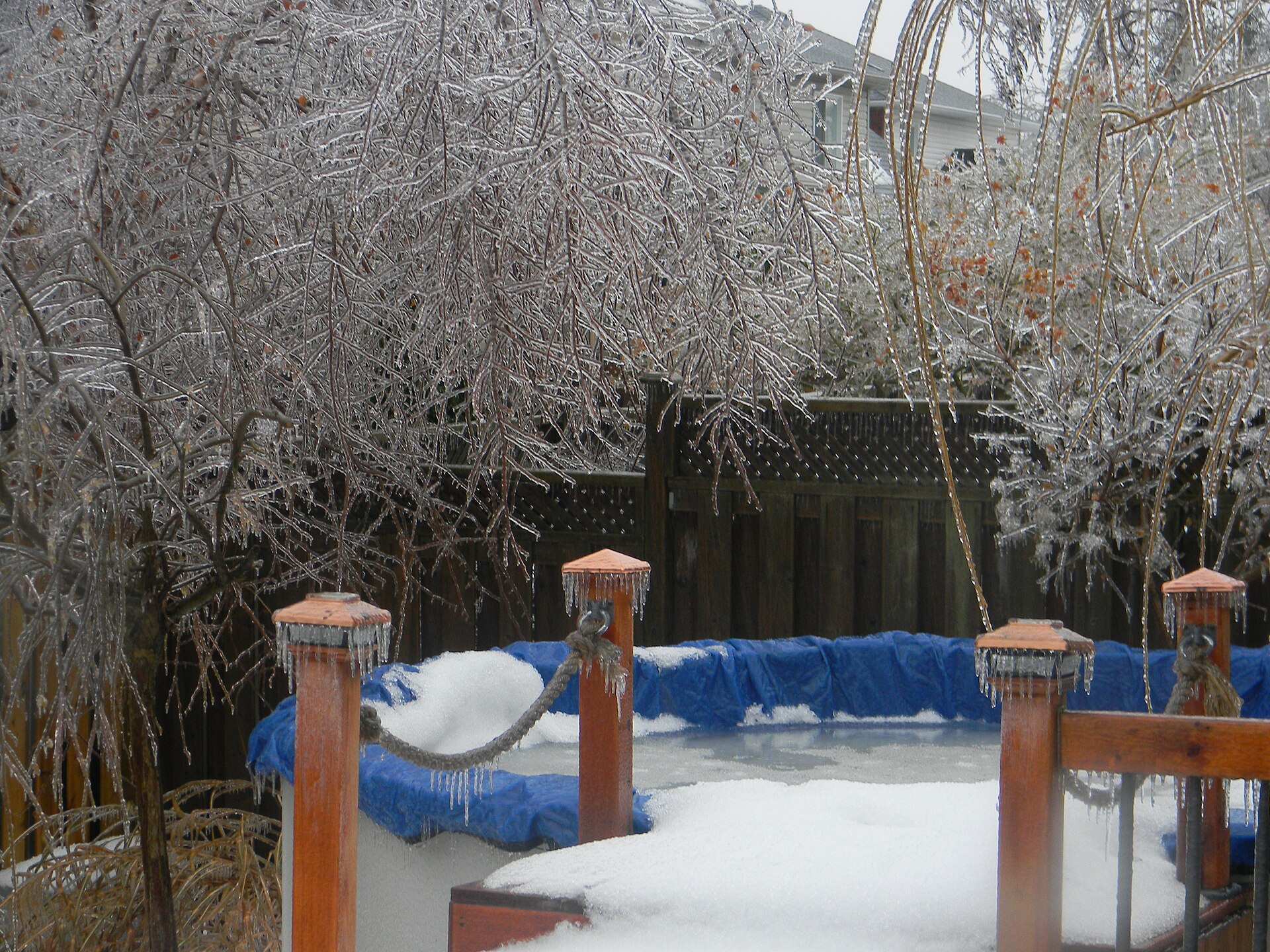
North Bay's northern continental climate (Plant Hardiness Zone 4b) features severe winters with frost penetration reaching 1.8 metres (6 feet) or deeper. The swimming season is condensed compared to southern Ontario, typically spanning late June through Labour Day or early September. A high-efficiency pool heater—powered by natural gas, propane, or an air-source heat pump—is practically essential for comfortable swimming temperatures. Meticulous autumn closing is critical: underground plumbing lines must be completely cleared with compressed air, plugged, and charged with non-toxic swimming pool antifreeze to withstand sub-zero temperatures down to -30°C and prevent frost-heave damage to pool walls and concrete decking.
What drives the price and what to ask
Quotes swing most on subsurface rock conditions and heating equipment: encountering shallow Canadian Shield granite can add thousands of dollars in hoe-ramming time, blasting permits, and rock disposal. Secondary cost factors include high-capacity heaters suited for northern nights, deep trenching for utility lines beneath local frost lines, robust winter safety covers, and conservation approvals for lakeside lots.
Ask each pool builder:
- Have you built inground pools in this specific neighbourhood of North Bay, and how often do you encounter shallow granite or high groundwater here?
- How do you structure contract pricing for unforeseen bedrock removal—is hoe-ramming billed by the machine hour or at a flat renegotiated rate?
- Who prepares the site plan, pulls the City fence permit, and coordinates the ESA electrical filing?
- If the lot touches Trout Lake, Lake Nipissing, or a creek, will you manage the NBMCA application process?
- What sizing and fuel type do you recommend for the pool heater given North Bay's climate and shoulder seasons?
- What warranties cover the shell, piping, and liner against severe northern frost heave, and are closing and spring opening services included in the first year?